
The Counselor Becomes the Patient
By Kim Gilmore Dunn
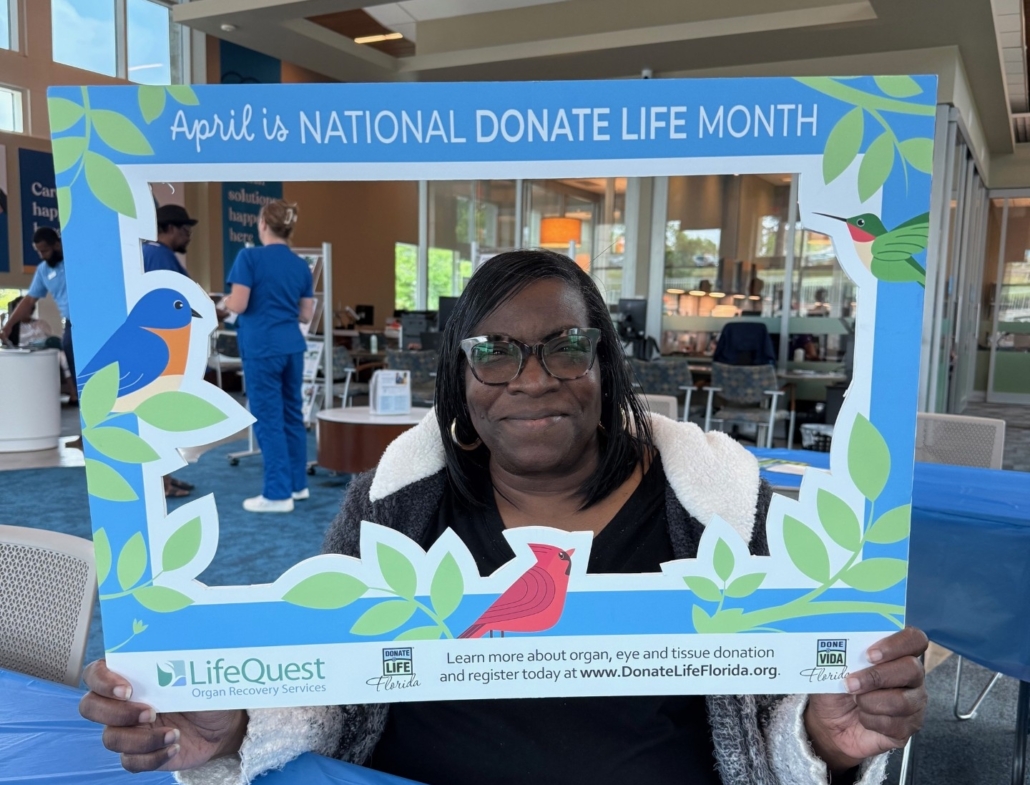
Siouxniqua Smith, a former U.S. Marine and rehabilitation disability counselor, dedicated her life to guiding others through hardship by encouraging them to embrace a positive outlook and live life fully. Then in 2009, the tables turned after a routine medical exam.
“I got a call from the doctor. He said, ‘Your kidneys are dying’,” said Siouxniqua, 64. “All of a sudden, out of the blue, I’m my own best client.”
Accustomed to helping others navigate adversity, Siouxniqua had to turn that support inward. She quickly went to the Mayo Clinic in Jacksonville, where doctors told her she had Stage 4 kidney failure, but they were unable to determine the cause of her rapid decline.
“I was never diagnosed with Stage 1, 2 or 3,” said Siouxniqua, who manages her Type 2 diabetes carefully. “None of the testing they did at Mayo showed a reason that my kidneys would fail like this.”
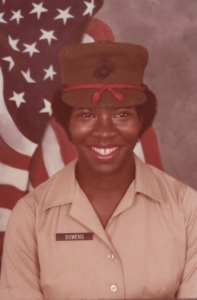
1984 USMC Graduation.
She leaned on her faith in God and her experience as a counselor and made a conscious choice to remain hopeful, despite the many unanswered questions.
Cheerfulness and generosity have defined Siouxniqua from an early age. Witnessing the exclusion of disabled peers in high school is what led her to want to help others, earning a bachelor’s degree in health and adaptive education and a master’s degree in rehabilitation and disability.
“I’m always optimistic,” she said. “The glass is always full. It’s overflowing as far as I’m concerned.”
Eventually, a letter from the United States government brought much-needed clarity: it confirmed that Siouxniqua had been exposed to toxic water while stationed at Camp Lejeune in North Carolina. Her symptoms, including kidney damage (renal toxicity) were consistent with that exposure. Her only option for survival was a kidney transplant.
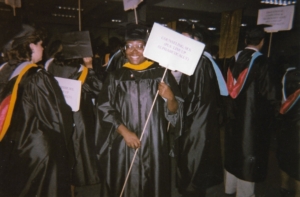
Siouxniqua earned her master’s degree at Barry University.
Inspired by the strength and resilience of her former cystic fibrosis patients, who face life-threatening challenges daily, Siouxniqua met the news of her own devastating diagnosis with remarkable composure.
“Many of them know they are going to die,” she said. “I began to understand how they think. You have to find joy in everything you do.”
Siouxniqua was on the transplant list for six years before receiving a new kidney at Mayo Clinic on August 8, 2015. During that time, she continued to help others by traveling to areas in Florida hit by natural disasters. She provided critical support to counselors who were overwhelmed by the impact of the disasters and unable to fully assist their own clients – all while on dialysis.
Through it all, Siouxniqua remained fully present, living by the values she taught, maintaining a positive attitude and staying focused on her purpose.
“I think God just uses people sometimes,” she said. “I’m not the only one who has gone through things. We all go through things – joys, triumphs and failures. But I’m still here. The point is to take care of yourself, and once you get an organ, continue to take care of yourself.”
Always eager to help, Siouxniqua hopes her story will educate and inspire others, especially within minority communities.
“When people see me and hear my story, they, too, can have hope that they can work, have a family, participate in their communities, and most importantly live a full life,” she said.
One myth Siouxniqua hopes to dispel is the belief that organ transplants must come from donors of the same race.

Siouxniqua in first grade.
“My kidney came from an older white lady,” she said humbly.
Siouxniqua’s donor, a grandmother who enjoyed gardening, lived up north and passed away after a massive heart attack. She met her donor’s family in 2017, and they continue to stay in touch.
“What struck me and still sticks with me to this day is that during an incredibly sad time for this family, they thought of others, and I benefitted from their generosity,” she said. “I just felt so at home with them. I assured them that I would honor this gift and take care of it. They will never have to worry about that.”
Siouxniqua remains deeply grateful and makes a conscious effort not to complain. She finds strength and guidance in the Bible, especially in Luke 12:48: “To whom much is given.”
“If anything, sometimes I ask myself, why me? I got a good kidney that has allowed me to live my best life for the past ten years. Some patients are not so lucky, and I cannot forget about them,” she said. “Because I’m OK. I’m absolutely OK. If I can wake up each day with a little sanity and make it to the coffee maker, we gonna be fine.”
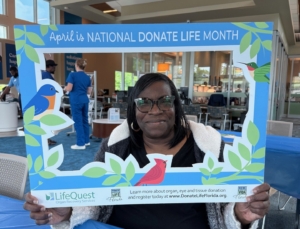
Siouxniqua celebrating National Donate Life month.