
From Vision Loss to Visionary
By Kim Gilmore Dunn
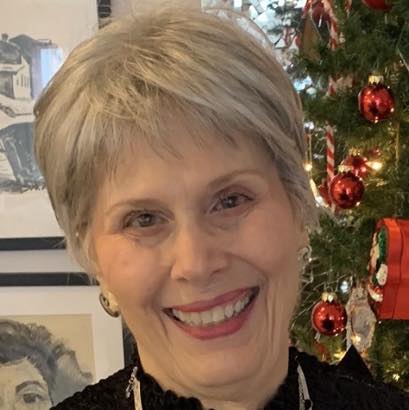
Loni Smith is an accomplished artist, author and teacher whose life and career have been profoundly shaped by her battle with vision loss. Despite facing double vision and progressive corneal disease, she continues to find ways to express her creativity and share her ideas with the help of emerging technologies and corneal transplants.
Today, with a bestselling book, a clearer view of the world, and decades of inspiring artistry behind her, Loni is a testament to the resilience and ripple effect of organ, eye and tissue donation.
“At 28, I was headed to legal blindness,” Loni said. “Had it not been for technology of all kinds, I would not be able to see. I would have been stuck. I would have been a blind person.”
Instead, Loni reflects on her life transformed by the generosity of others.
“For more than fifty years, I have been blessed with the gift of sight from strangers,” she said. “How can I possibly express the gratitude and love I feel for those who granted me the escape from a lifetime where every day would have been defined by limitation instead of possibilities?”
Early Years: A Budding Artist
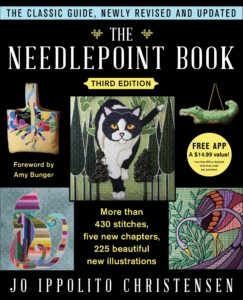
The Needlepoint Book, Third Edition
Loni’s artistic journey began early. At just five years old, she was already exploring creative outlets. At age 10, her mother gave her a Singer sewing machine, fostering her passion for making clothes and home décor. In high school, Loni pursued home economics, eventually majoring in textiles and clothing in college, and proudly made all the clothes she wore.
In her twenties, living in Kansas City with her husband, Loni discovered needlepoint through an aunt. She attended classes and practiced diligently. Her dedication led to collaborations, including writing craft books with her teacher.
“I was always sort of artsy and crafty,” Loni recalls.
The Onset of Vision Problems: Diagnosis and Early Challenges
At 28, while pregnant, Loni began experiencing troubling symptoms of double vision, which affected her ability to see close-up objects clearly. She struggled with simple visual tasks and soon sought help from multiple ophthalmologists. Eventually, she was referred to the prestigious Wilmer Eye Institute at Johns Hopkins Hospital in Maryland, where she was diagnosed with keratoconus, a rare and progressive thinning of the cornea that distorts vision.
At the time, treatments were limited. She was prescribed rigid gas permeable (RGP) contact lenses, the only option available. Though these lenses helped her achieve 20/20 or 20/25 vision temporarily, her eyes were constantly changing, and available technology could not keep up with the progression of her disease.
Loni built a life apart from stitching. She went to law school and taught business law and business management for 30 years as a professor. She took up a variety of arts and crafts but felt like something was missing.
“Needlepoint had fed my soul,” Loni said.
Navigating Life and Vision Challenges
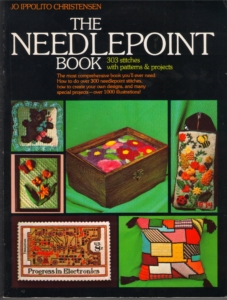
Loni’s pen name is Jo Ippolito Christensen.
Between 1972 and 1975, Loni and her husband moved to Alaska. Her RGP lenses caused painful corneal abrasions, and local doctors struggled to find suitable replacements. Thanks to a fortunate connection, she was flown to Fort Lewis, Washington, where an opthalmologist fit new lenses through a month of painstaking daily visits. This fitting process was more art than science, but it enabled her to see clearly again for the first time.
In 1976, Loni published The Needlepoint Book, a comprehensive dictionary of stitches, affectionately known in the craft world as the Black Bible for its thoroughness and iconic black cover. This marked the beginning of her lasting impact in the needlepoint community. Over the years, she published 11 books, including revised editions by major publishers like Simon & Schuster.
By the 1980s, she developed cataracts, and at age 37, Loni underwent cataract surgery, adding another chapter to her complex visual health journey.
A Lifeline: Corneal Transplants and The PROSE Devise
Keratoconus is progressive, and from the late 1970s through 2005, Loni underwent multiple corneal transplants – twice in each eye. In those early years, only a handful of doctors worldwide were performing successful transplants, including specialists at Johns Hopkins, the University of Florida, and Massachusetts Eye and Ear.
Despite the successful surgeries and evolving treatments, Loni’s vision remained a challenge, constantly threatening to sideline her creative career and everyday life.
In 2009, Loni found new hope at the Boston Foundation for Sight (now BostonSight). After a month of intensive fittings, she was fitted with the PROSE device, a corneal prosthesis that restored her vision to an astounding 20/15, better than normal vision and exactly what she needed to continue stitching intricate needlepoint work.
Continued Success and Legacy
In 2013, at an American Needlepoint Guild Seminar, Loni’s publisher approached her to revise her classic needlepoint book, which has remained in print for nearly five decades. Her book has sold more than 432,000 copies and continues to inspire both beginners and seasoned needlepoint artists.
Loni credits her lifelong creative spirit and adaptability, noting that her art principles – color theory, design, and thoughtful composition – have helped “stitchers” elevate their own projects into works of art.
“The book is 49 years old, and I’m still having book signings,” Loni said.
Advocacy
Loni is also a passionate advocate for organ and corneal donation. Having benefitted directly from corneal transplants and cutting-edge technologies, she clearly sees the domino effect of the Gift of Life.
“I’ve been on the wrong end of conversations where people won’t donate because they don’t want it to affect their loved one’s body to help just one person,” she said. “The ripple effect is huge, and I’m a prime example of that.”
Life Today
At 81, Loni continues to create, publish, and connect with fans through book signings and workshops. She embraces the clarity and vision made possible by an organ donor, medical advancements and her enduring determination.
“It changed my life,” Loni said. “All of my skills wrap around my vision. I’d have been an entirely different person. I think it would’ve been a huge mental exercise to get me out of the depths of depression if I lost my sight.”
As an author, artist and teacher, Loni has dedicated her life – and the profound gift of sight passed on to her – toward helping others.
“I hope that, entrusted with this precious gift, I have honored it by nurturing a legacy that endures,” she said.
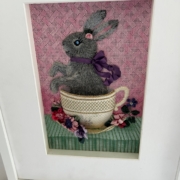
Bunny in a Teacup.
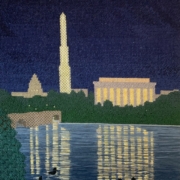
Washington, D.C.
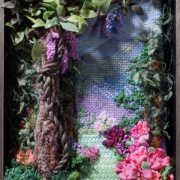
Textured foilage.
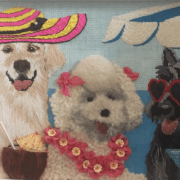
Dogs in 3D.
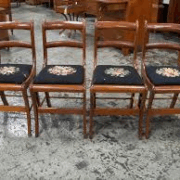
Dining room chairs.